Surf Lifesavers Recognised at 2026 South Australian Emergency Services Awards
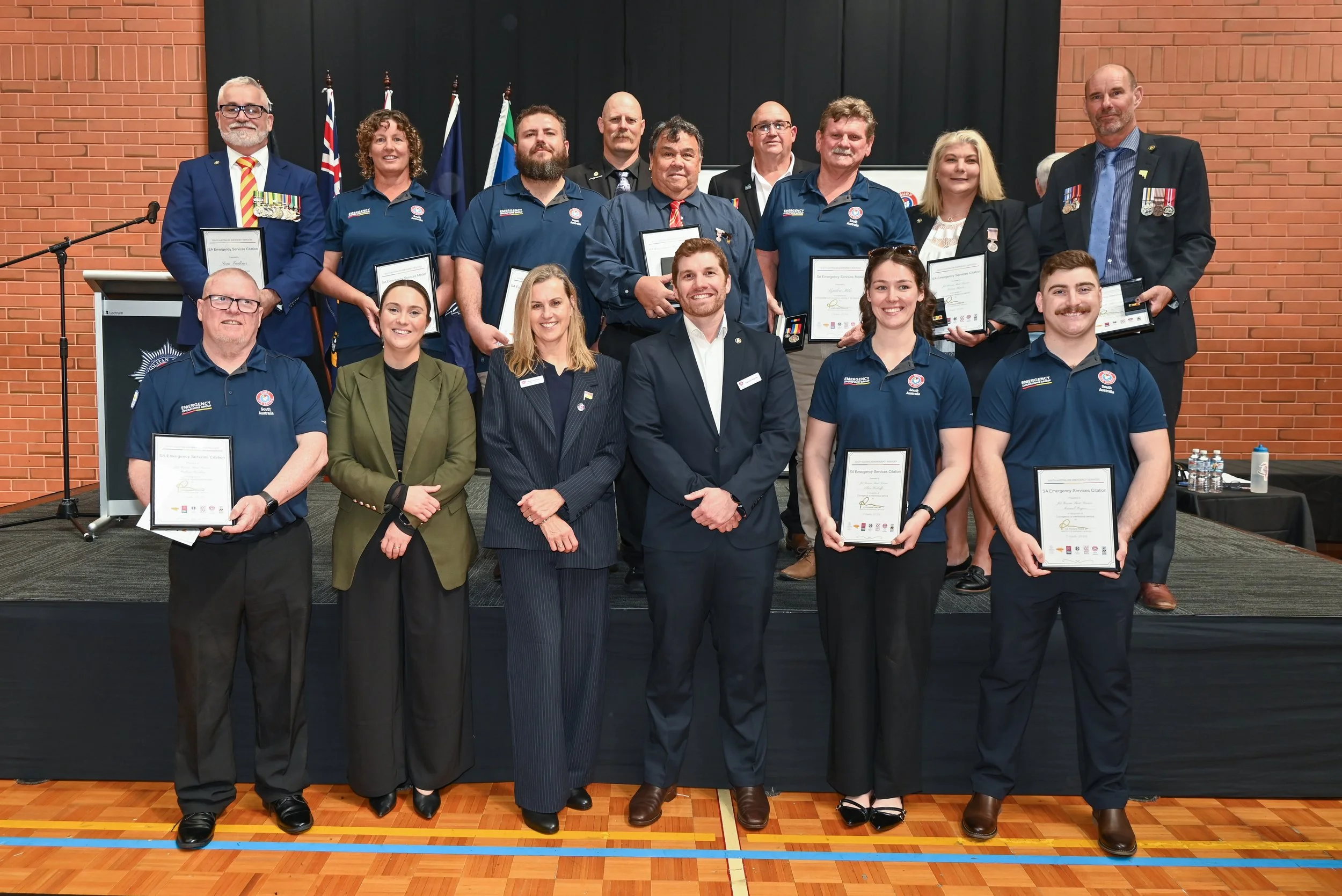
Surf Life Saving SA was honoured to have 13 volunteers recognised and celebrated at the 2026 South Australian Emergency Services Awards.
These awards were created to recognise the tireless and extraordinary work of persons contributing to community safety through operational emergency service organisations and associated agencies.
Emergency Services Medal
The SAESM is given to an individual or unit who has demonstrated "distinguished and/or meritorious services of the highest order" in recognition of their significant contribution to the emergency services in South Australia. The SAESM award is a full coin Medal set and framed certificate.
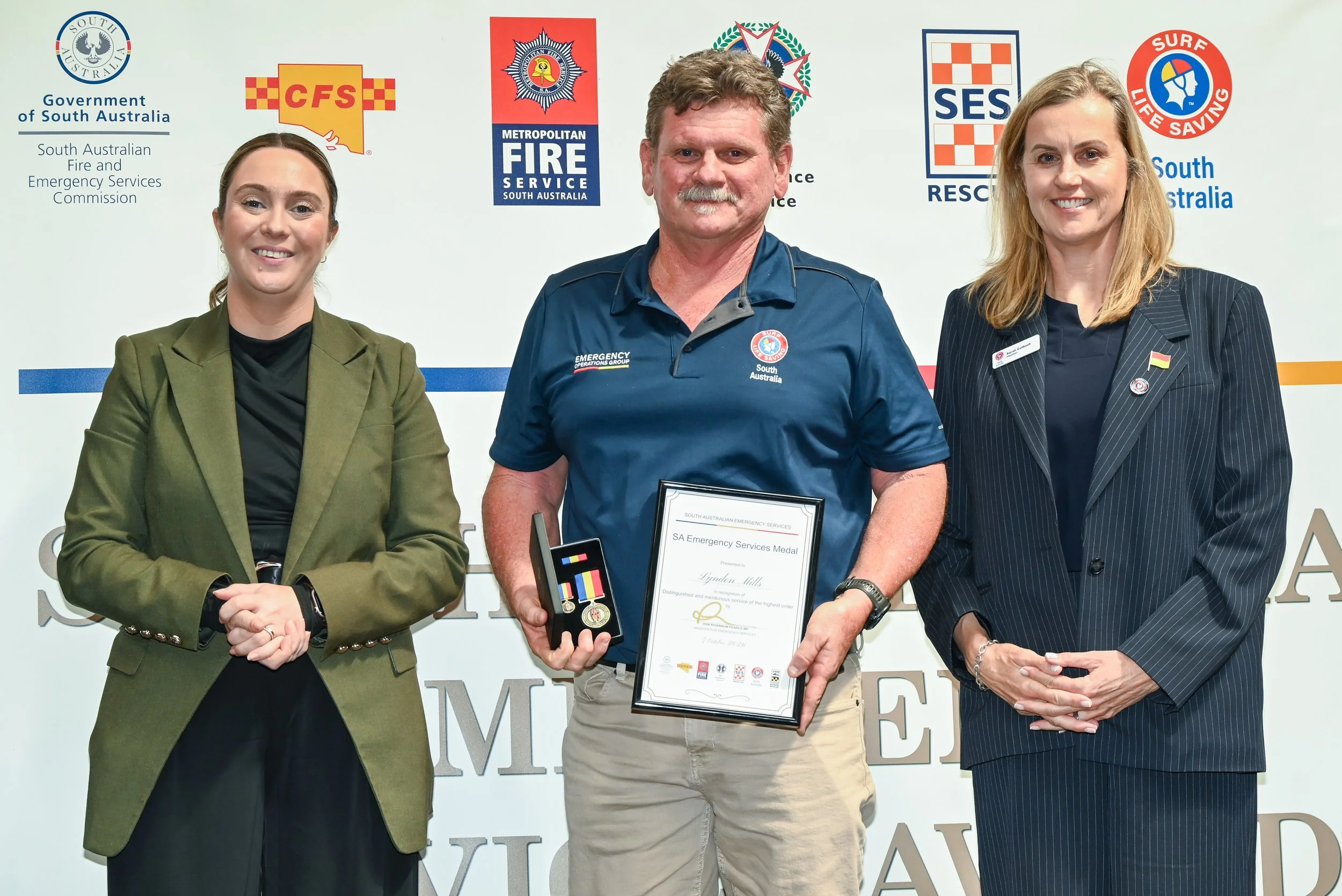
Lyndon Mills
Lyndon Mills has provided more than two decades of distinguished service to Surf Life Saving South Australia (SLSSA), making an exceptional contribution to emergency response, operational capability, volunteer development and community safety.
A Life Member of South Port Surf Life Saving Club, Lyndon has consistently combined frontline operational service with leadership, training and specialist rescue roles. His more than 3,700 patrol hours and 188 qualifications reflect a sustained commitment to protecting the South Australian community and maintaining the highest professional standards.
Lyndon was the inaugural SLSSA State Rescue Water Craft Officer and played a pivotal role in establishing South Australia's RWC capability. He developed operational procedures, safety standards and training frameworks that continue to underpin the service today. For more than 18 years he has trained, assessed and mentored lifesavers, directly contributing to the development of rescue capability across the state.
His operational leadership includes more than a decade as an SLSSA Duty Officer, coordinating emergency responses and supporting statewide operational readiness. He also served nine years as Club Captain of South Port SLSC, leading volunteer operations and mentoring emerging leaders.
Lyndon's specialist service extends to more than eight years with the Westpac Lifesaver Rescue Helicopter Service, supporting aerial search, rescue and training operations.
His contribution is distinguished by both longevity and impact. Through sustained leadership, thousands of volunteer service hours and a lasting influence on rescue capability, training systems and operational preparedness, Lyndon has made an outstanding contribution to emergency service and community safety in South Australia.
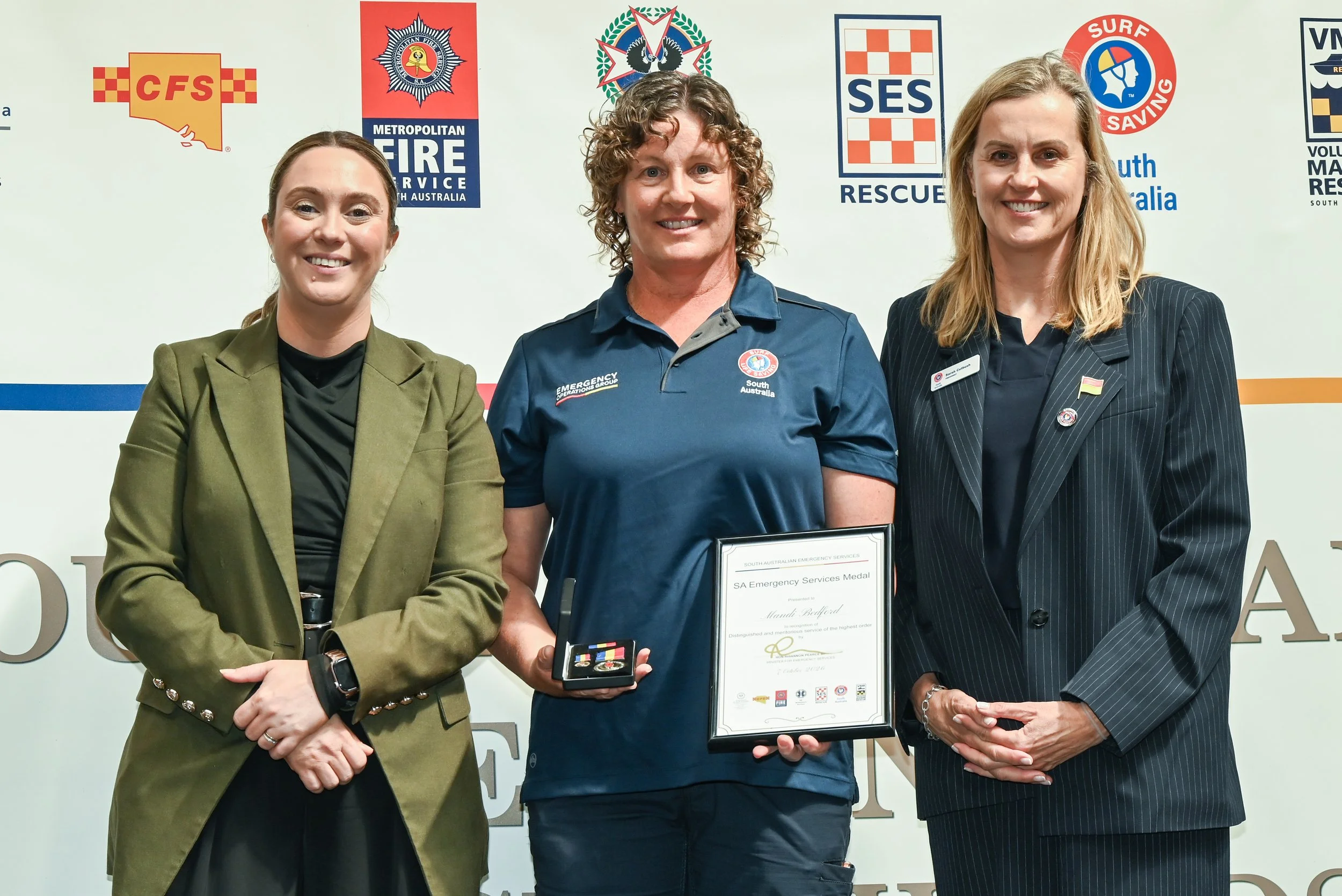
Mandi Bedford
Mandi Bedford has provided more than 35 years of distinguished volunteer service to Surf Life Saving in South Australia, making an exceptional contribution to frontline lifesaving, training and assessment, specialist rescue operations, volunteer development and community safety.
Beginning her lifesaving journey in 1990 at Aldinga Bay Surf Life Saving Club, Mandi has maintained a sustained commitment to the movement, with memberships spanning Moana, South Port and Christies Beach before returning to Aldinga Bay, where she continues to serve today. Her dedication has been recognised through numerous service awards, including the National Medal and 1st Clasp (25 Years Service), 30 Year Training Service Certificate, 25 Year Assessing Service Certificate, 20 Year Officiating Service Certificate and 15 Year National Patrol Service Award.
For more than three decades, Mandi has played a pivotal role in training, assessing and mentoring generations of lifesavers across multiple disciplines. Holding a Certificate IV in Training and Assessment, along with qualifications as a Training Officer and Assessor in Bronze Medallion, Inflatable Rescue Boat (IRB) and Advanced Resuscitation, she has made a lasting contribution to strengthening lifesaving capability and volunteer preparedness across South Australia.
Her extensive operational experience includes qualifications as a Rescue Water Craft (RWC) Operator, Jet Rescue Boat (JRB) Crewperson, Silver Medallion Aquatic Rescue, Silver Medallion IRB Driver and Silver Medallion Beach Management. Her specialist service also extends to the Westpac Lifesaver Rescue Helicopter Service, where she previously served as both a Crewperson and Air Crewperson, supporting critical aerial rescue capability.
Beyond her frontline and training contributions, Mandi continues to support the development of lifesavers through her roles as a Technical Official, coach and officiating contributor. She has also served as a mentor in Surf Life Saving Australia's National Women's Mentoring Program, sharing her extensive knowledge and experience to support the next generation of leaders.
Mandi's contribution is distinguished by both longevity and breadth of service. Through more than three decades of volunteer commitment, specialist operational expertise and a lasting influence on training, assessment, mentoring and emergency preparedness, she has made an outstanding contribution to Surf Life Saving and community safety in South Australia.
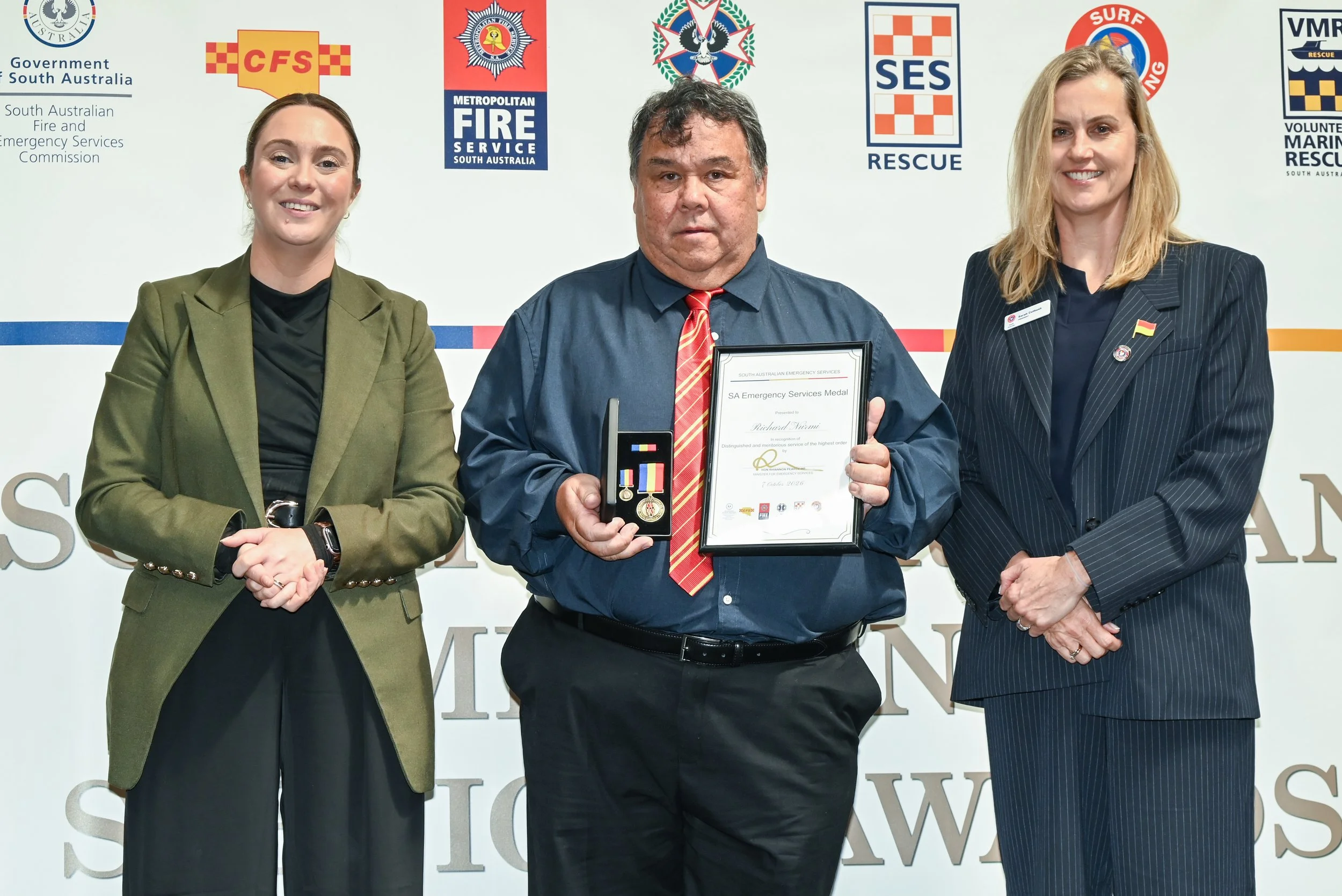
Richard Nurmi
Richard Nurmi has provided more than 25 years of distinguished service to Surf Life Saving South Australia (SLSSA), making an exceptional contribution to emergency response, volunteer development, operational readiness and community safety.
A Life Member of Christies Beach Surf Life Saving Club, Richard has contributed more than 4,000 patrol hours protecting beachgoers and responding to incidents along South Australia's coastline. During the 2025/26 season alone, he completed more than 151 patrol hours while continuing to undertake extensive leadership, training and operational support responsibilities.
For more than two decades, Richard has simultaneously served as both Club Secretary and Chief Instructor at Christies Beach SLSC. These critical leadership roles have seen him oversee governance, operational coordination, member development, stakeholder engagement and the maintenance of essential lifesaving facilities and equipment. His contribution has been instrumental in ensuring the long-term sustainability and operational effectiveness of one of South Australia's busiest surf lifesaving clubs.
Richard is widely recognised as an outstanding educator and mentor. As a Trainer, Assessor and State Facilitator, he has trained, assessed and mentored hundreds of lifesavers across multiple award streams, including Bronze Medallion, Surf Rescue Certificate, Advanced Resuscitation Techniques and Silver Medallion Patrol Captain. His efforts have directly strengthened emergency response capability across South Australia.
Known for his professionalism, reliability and commitment to service, Richard has consistently placed the safety, wellbeing and development of others ahead of personal recognition.
Through more than 25 years of sustained volunteer service, operational leadership and lifesaving education, Richard Nurmi has made an outstanding contribution to emergency service and community safety in South Australia and is a highly deserving recipient of the South Australian Emergency Services Medal.
Emergency Services Citation
The Citation award recognises meritorious or courageous action and is a ribbon bar and framed certificate.
Jet Rescue Boat Service: Robert Tanner, Scott Lines, Matthew Crichton, Maxwell Rogers, John Charles, Noelene Charles, Lillian Woodroffe and Christopher Parsons
On 06 February 2026, two volunteer Jet Rescue Boat (JRB) crews from Surf Life Saving South Australia (SLSSA) were deployed in direct support of the South Australia Police Water Operations Unit (SAPOL WOU) during the recovery phase of a light aircraft crash at the Goolwa River Mouth. The operation extended from late afternoon well into night-time, unfolding within a highly volatile surf environment defined by 1.8 metre breaking waves, strong tidal currents, submerged aircraft wreckage, and rapidly deteriorating visibility.
Due to the severity of surf conditions and diminishing visibility, all other vessel types were assessed as unsuitable for deployment, resulting in the JRBs becoming the only operational platform for sustained support. Critically, these jet boats operated in low-light and night conditions, in high-energy surf, strong currents, and in the immediate vicinity of submerged aircraft wreckage while SAPOL divers were actively in the water.
As light faded, conditions transitioned into low-light and then near-darkness, significantly amplifying risk to all personnel operating on and in the water. The aircraft fuselage remained within the surf zone throughout, presenting a persistent and unpredictable submerged hazard. SAPOL divers were actively deployed in the water conducting recovery operations in close proximity to this wreckage.
The JRB crews demonstrated exceptional seamanship and composure, maintaining precise vessel control within breaking surf while providing safe transport and direct operational support to SAPOL WOU divers. This required continuous situational awareness, disciplined risk management, and the ability to hold station in an environment where margins for error were minimal and consequences severe.
Crews also demonstrated initiative through the innovative use of tow lines as stabilisation points, directly enhancing diver safety and operational effectiveness in a complex recovery environment.
Throughout prolonged night operations, the crews provided calm, reliable and essential support to SAPOL WOU, enabling recovery activities to proceed safely under exceptionally hazardous conditions.
While survivability outcomes had been assessed as extremely limited, their actions were critical in enabling a safe, coordinated and dignified recovery. Their presence directly supported SAPOL operations and contributed meaningfully to bringing closure for the families affected.
Their conduct reflects meritorious service of the highest order and is deserving of formal recognition through the South Australian Emergency Services Citation.
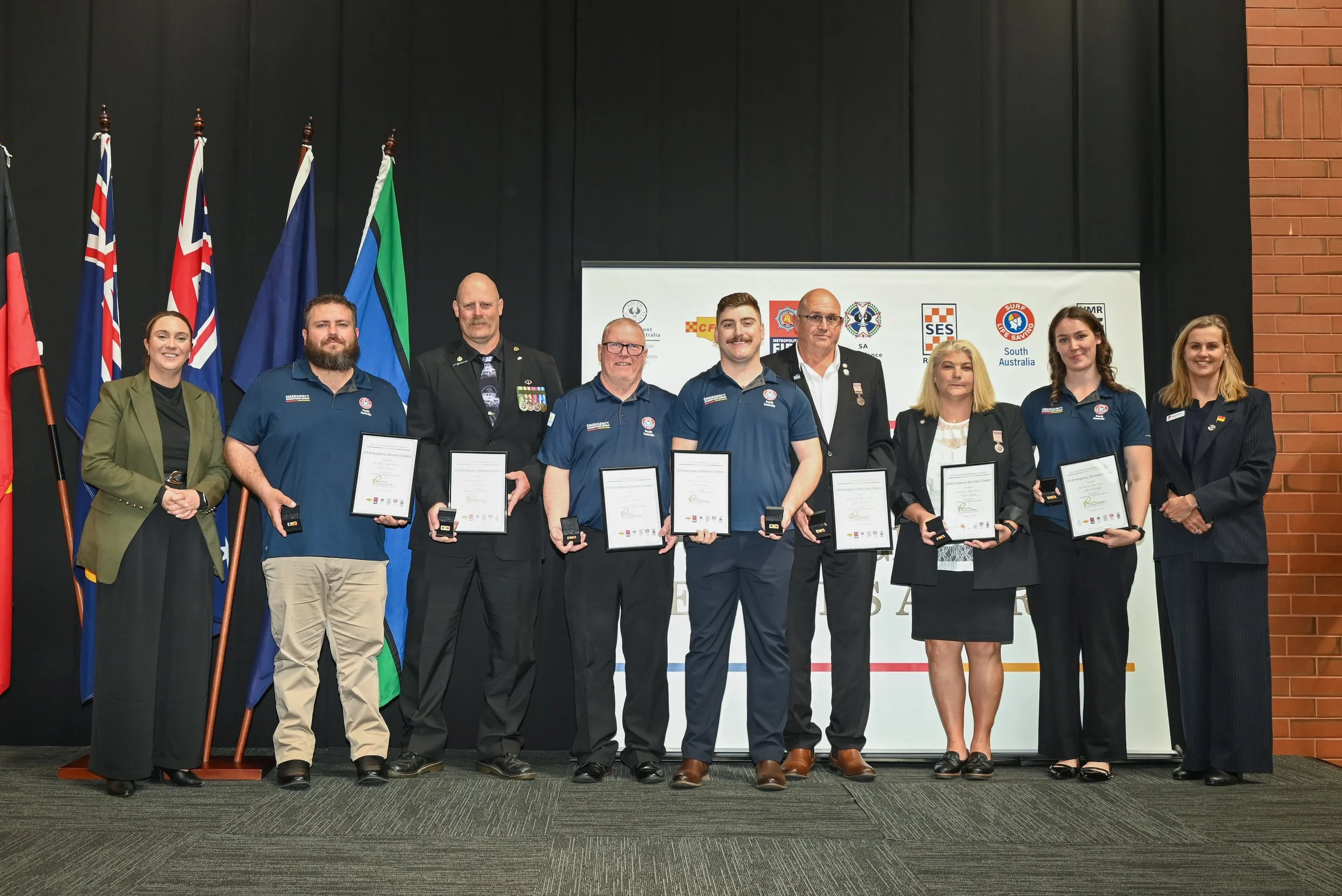
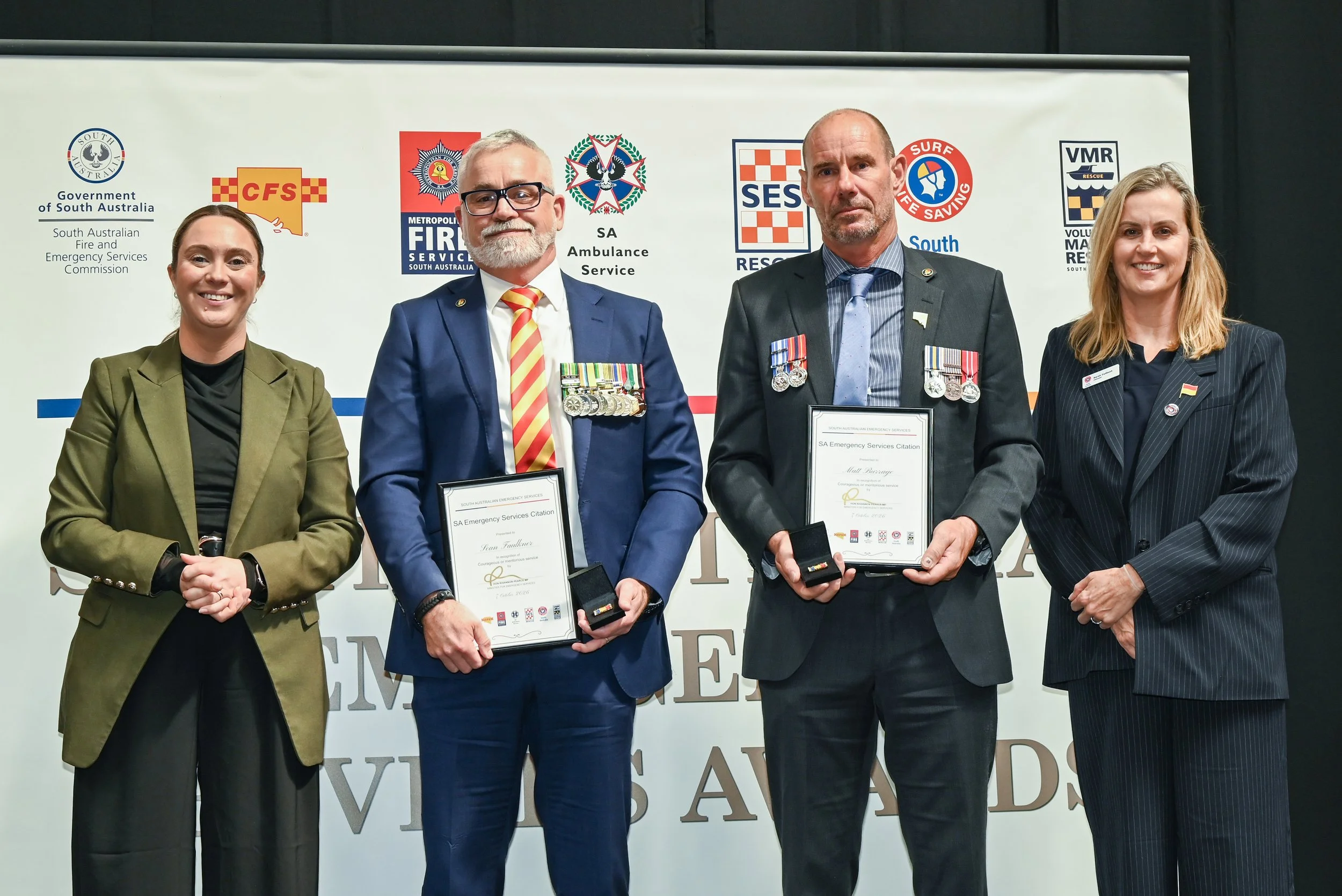
Matthew Burrage and Sean Faulkner
On 06 February 2026 at approximately 1630 hrs, Matthew Burrage and Sean Faulkner from Surf Life Saving South Australia (SLSSA) were the first responders to a light aircraft crash at the Goolwa River Mouth. Rapidly deploying from Goolwa SLSC, they launched a Rescue Water Craft (RWC) into extreme and rapidly deteriorating surf conditions that presented significant risk to responders and were well beyond those typically encountered during routine operations.
On arrival, Burrage, operating the Rescue Water Craft (RWC), located the crash site in 1.8 to 2 metre breaking surf, strong lateral currents and turbulent water surrounding submerged aircraft wreckage, and immediately commenced searching for survivors. From the RWC, he conducted an initial assessment while managing the craft in a highly dynamic and hazardous surf environment. The fuselage was shifting within the surf zone and at risk of becoming obscured, displaced or lost beneath constantly breaking waves. Operating alone on the RWC, Burrage demonstrated exceptional judgement, composure and surf capability while assessing the evolving situation under significant operational pressure.
Recognising the escalating risk, Burrage returned to shore and immediately requested a second operator, transitioning to a two-person deployment with Sean Faulkner. This decision reflected sound operational judgement and enabled a coordinated response in conditions where responder safety and mission success were under significant threat. Working together in extreme surf, Burrage and Faulkner repeatedly manoeuvred around unstable wreckage and breaking waves to maintain visual reference of the aircraft.
Demonstrating exceptional courage and commitment, Faulkner dismounted from the RWC sled and swam onto the partially submerged fuselage, exposing himself to powerful surf, shifting debris and an unstable platform. From this position he secured a rescue tube to mark the aircraft. When ongoing surf action and movement of the wreckage compromised the initial marker, Burrage and Faulkner re-entered the hazardous surf zone and attached an additional marker to ensure the aircraft remained identifiable to incoming assets.
Without their determination to repeatedly enter an exceptionally hazardous environment and physically mark the wreckage, the airframe may not have been located and recovered in a timely manner. Their actions directly enabled the broader multi-agency recovery effort and helped prevent delays in achieving resolution and closure for the families affected by the tragedy.
The combination of operating in extreme surf, engaging directly with unstable wreckage, and repeatedly exposing themselves to considerable personal risk reflects courage, resilience, operational excellence and devotion to duty well beyond normal expectations. Their actions represent meritorious service of the highest order in a complex and dangerous emergency environment.